

TMJ Pain and Treatment: Midtown Manhattan NYC
What is TMJ?
- Temporomandibular joint (TMJ) disorders are a family of problems related to your jaw joint.
- If you have had symptoms like pain or a “clicking” sound, you’ll be glad to know that these problems are more easily diagnosed and treated than they were in the past.
- These symptoms occur when the joints of the jaw and the chewing muscles do not work together correctly.
- TMJ stands for temporomandibular joint, which is the name for each joint (right and left) that connects your jaw to your skull.
- Because some types of TMJ problems can lead to more serious conditions, early detection and treatment are important.
- No one treatment can resolve TMJ disorders completely and treatment takes time to become effective. Dr. Greenberg can help you have a healthier, more comfortable jaw.
Dr. Greenberg specializes in diagnosing and treating TMJ disorders, offering personalized treatment options to alleviate pain and improve jaw function. Schedule an appointment today for expert care and experience relief from TMJ discomfort.
Call 212-319-9700 AppointmentsTrouble With Your Jaw?
TMJ disorders develop for many reasons. You might clench or grind your teeth, tightening your jaw muscles and stressing your TM joint. You may have a damaged jaw joint due to injury or disease. Injuries and arthritis can damage the joint directly or stretch or tear the muscle ligaments. As a result, the disk, which is made of cartilage and functions as the “cushion” of the jaw joint, can slip out of position. Whatever the cause, the results may include a misaligned bite, pain, clicking, or grating noise when you open your mouth, or trouble opening your mouth wide.
Do You Have a TMJ Disorder?
- Are you aware of grinding or clenching your teeth?
- Do you wake up with sore, stiff muscles around your jaws?
- Do you have frequent headaches or neck aches?
- Does the pain get worse when you clench your teeth?
- Does stress make your clenching and pain worse?
- Does your jaw click, pop, grate, catch, or lock when you open your mouth?
- Is it difficult or painful to open your mouth, eat, or yawn?
- Have you ever injured your neck, head, or jaws?
- Have you had problems (such as arthritis) with other joints?
- Do you have teeth that no longer touch when you bite?
- Do your teeth meet differently from time to time?
- Is it hard to use your front teeth to bite or tear food?
- Are your teeth sensitive, loose, broken or worn?

The more times you answered “yes”, the more likely it is that you have a TMJ disorder. Understanding TMJ disorders will also help you understand how they are treated. Dr. Greenberg can diagnose and treat TMJ issues.
TMJ Treatments
There are various treatment options that Dr. Greenberg can utilize to improve the harmony and function of your jaw. Once an evaluation confirms a diagnosis of TMJ disorder, Dr. Greenberg will determine the proper course of treatment. It is important to note that treatment always works best with a team approach of self-care combined with professional care.
The initial goals are to relieve the muscle spasms and joint pain. This is usually accomplished with a pain reliever, anti-inflammatory, or muscle relaxant. Steroids can be injected directly into the joints to reduce pain and inflammation. Self-care treatments can often be effective as well and include:
- Resting your jaw
- Keeping your teeth apart when you are not swallowing or eating
- Eating soft foods
- Applying ice and heat
- Exercising your jaw
- Practicing good posture
Stress management techniques such as biofeedback or physical therapy may also be recommended, as well as a temporary, clear plastic appliance known as a splint.
Mouth Guard and Appliances
- A splint (or night guard) fits over your top or bottom teeth and helps keep your teeth apart, thereby relaxing the muscles and reducing pain. There are different types of appliances used for different purposes. A night guard helps you stop clenching or grinding your teeth and reduces muscle tension at night. It also helps to protect the cartilage and joint surfaces.
- An anterior positioning appliance moves your jaw forward, relieves
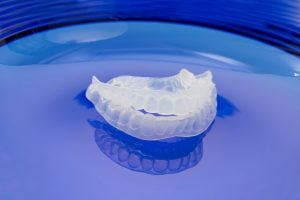 pressure on parts of your jaw, and aids in disk repositioning. It may be worn 24 hours/day to help your jaw heal.
 - An orthotic stabilization appliance is worn 24 hours/day, or just at night, to move your jaw into proper position. Appliances also help protect tooth wear.



What About Bite Correction or Surgery?
If your TMJ disorder has caused problems with how your teeth fit together you may need treatment such as bite adjustment (equilibration), orthodontics with or without jaw reconstruction, or restorative dental work.
Surgical options, such as arthroscopy and open joint repair restructuring, are sometimes needed, but are reserved for severe cases. Dr. Greenberg does not consider TMJ surgery unless the jaw can’t open, is dislocated and non-reducible, has severe degeneration, or the patient has undergone appliance treatment unsuccessfully.
Patient Reviews: TMJ Diagnosis & Treatment
This reviews section is in progress. Please visit the Patient Review form to leave a review about your experience with Alex M. Greenberg, DDS, PC. You may also read patient reviews on Google or leave a Google review.
For more information about TMJ diagnosis, TMJ treatments, or to make an appointment, please call our Midtown Manhattan NYC office at: Address & Phone Phone Number 212-319-9700.